
Hope is not a scaling strategy
Process is.
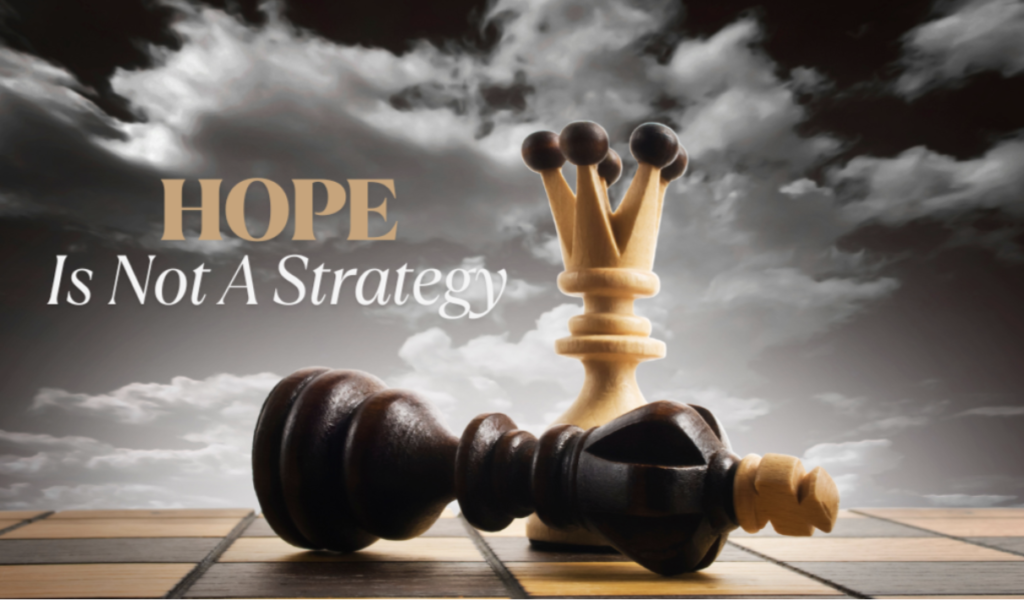
Why Process Is the Only Real Business Scaling Strategy
Most founders say they want to scale their businesses. What many are actually doing, is surviving, only now at a slightly higher revenue level. Revenue increases, new hires are added, meetings multiply, and the complexity of the organisation grows alongside it. Yet despite the progress on paper, things feel more fragile and chaotic than ever and the founder finds themselves staring at the ceiling from their bed at 3am.
The reason is simple. Growth without process is just effort with a time delay.
Why Effort Alone Won't Scale Your Business
In many companies, results depend heavily on the founder’s memory, energy, and constant involvement. Sales happen because one person drives them forward. Meetings drift because there is no structure guiding them. Priorities change every Monday depending on what feels most urgent that week rather than what truly matters.
When this is the case, the organisation has not built a system that scales. Instead, it has created a situation where a high performing individual is holding together work that should be carried by process.
Process is often misunderstood. It is mistaken for bureaucracy, paperwork, or the type of corporate structure that slows companies down. In reality, well designed process does the opposite. It protects quality as a business grows. It allows work to be delegated without standards slipping. It prevents teams from revisiting the same decisions again and again. And it creates accountability without forcing leaders to micromanage.
Without documented and repeatable ways of working, variation inevitably increases. When outcomes vary from person to person or week to week, pressure rises. When pressure rises, leaders naturally step in to regain control. But control, when it depends on a single person, does not scale. This control also damages culture.
This is why process matters so much to the work we do at Bloom Growth™. Much of our focus is on helping leadership teams establish a clear operating rhythm inside their companies. That rhythm typically includes defined priorities, clear ownership of outcomes, structured meetings, measurable scorecards, and consistent follow through.
The goal is not structure for the sake of structure. It is clarity.
Clarity removes friction. When teams understand what matters, who owns it, and how progress is measured, work moves faster. Decisions improve because they are made against clear expectations rather than shifting opinions. Energy that once went into confusion and firefighting is redirected toward execution.
Importantly, the objective of process is not perfection. It is repeatability.
Repeatable systems allow a business to function reliably even when the founder is not present in every decision. They turn effort into something durable. And they make growth sustainable rather than exhausting. Processes also evolve, once you have it in place, it can be incrementally improved.
Hope says, “We’ll figure it out.” Process says, “Here’s how we do it.”
For leaders serious about scaling their organisations this year, the most useful question is a simple one: where in your business are you still winging it?
That is almost always the next process worth building.
In this week’s video I spoke about the importance of process and workflow when making a perfect cup of coffee. If you missed that, check it out on below.